
Midrange Negotiation: Who Gets to Speak First?
Your mix is loud. The lead vocal is still disappearing. This is not a frequency problem.


The mix is loud. You know it’s loud. Every frequency is accounted for, the gain staging is clean, the levels are right. And the lead vocal still disappears when the synth filter opens. The snare loses its cut the moment the chord pads come in. The kick has body in solo but no snap in the full arrangement.
Loud is not clear. You knew that. What you may not know is why adding more top end keeps making it worse.
What You’re Actually Hearing
The 200Hz–4kHz range is where intelligibility lives. Not because engineers chose it: because human hearing processes information there. Vowels. Consonants. The attack of a snare hit. The leading edge of a pluck. The harmonic content that tells your ear what an instrument is before the sustain fills in.
Every important element in your mix claims territory in that range simultaneously. The lead vocal. The lead synth. The snare body. The rhythm guitar or chord patch. The piano or string hits. They are all, always, competing for the same perceptual space. When that space gets contested, nothing wins. The mix gets louder and less intelligible in the same move.
Adding 3kHz to your lead vocal does not give it more room. It raises the stakes for everything else with energy in that range, and the competition restarts at a higher level. Same fight, more volume.
You are not solving a frequency problem. You are managing a territorial dispute.
The False Fix
The instinct to reach for the high end when a mix is unclear has a logical basis. Presence lives in the upper mids. Brightness opens a mix. Both things are true in isolation.
In a full arrangement, they are often wrong.
When a vocal feels buried, the reflex is to pull up 2–5kHz until it cuts. Sometimes that works for 30 seconds, until your ears recalibrate to the new level and everything goes back to feeling the same. The vocal is louder. It still isn’t clear. You pull more. The mix starts to feel harsh and still nothing separates.
The high-frequency shelf isn’t broken. The assumption is. Clarity is not an extraction. You cannot pull it out of a crowded mid range with enough boost. What you are actually trying to do is carve out dedicated perceptual space for your lead voice. That is a structural decision, not an EQ move.
The Listening Experiment
Take your busiest mix. The one where you have been fighting this exact problem for the last hour.
Identify the second-most-important midrange element: not the lead, the one directly behind it in the hierarchy. The chord synth under the vocal. The rhythm layer under the lead pluck. The pad filling the space the main voice lives in. Solo it and verify it has real midrange presence. It does. Now mute it completely.
Sit with the mix for 30 seconds.
Notice what happened to the lead. Notice what happened to the snare. There is a reasonable chance the mix now feels unexpectedly open, not sparse. The lead voice is not louder; the fader did not move. But it is more present, more readable, more there. What you are hearing is what your lead sounds like without a direct competitor occupying the same perceptual territory.
Bring the second element back. But bring it back differently. Lower the level by 2–4dB. Roll off some of its top-end presence so it is not competing with the air your lead uses. Filter its high mids so it occupies the supporting register rather than the lead register. It can still be in the mix. It just cannot be there at full strength in the same frequency range at the same time.
The lead does not need to shout anymore.
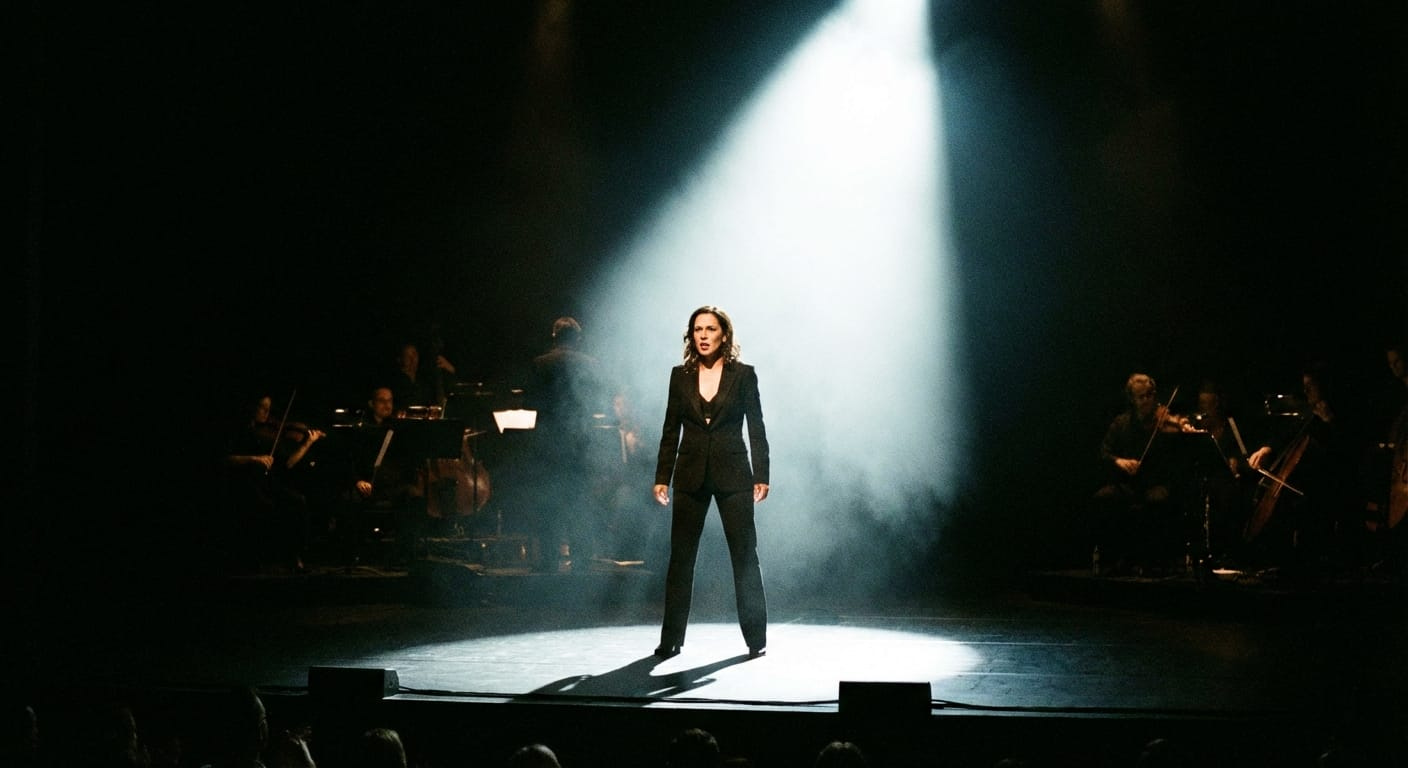
Negotiating the Space
Every mix has a lead voice. Not a lead channel: a lead voice. The element carrying the most information at any given moment. In trance, that shifts. The pluck carries the arrangement through the intro. The lead synth takes over after the breakdown. The vocal sample lands on the drop. The lead voice changes. The principle does not.
Whatever is currently leading gets the most dedicated space. Everything else earns its overlap by filling territory the lead is not using.
This is not a radical concept, but it requires a specific discipline: willingness to make your supporting elements smaller. Not quiet, not absent. Just smaller. The chord patch that fills out the arrangement brilliantly in solo needs to release the upper midrange when the lead synth comes in. The rhythm layer needs to pull back from the presence band when the vocal lands. The pad can hold the low-mid and the body without competing for the top of the range where the lead voice is operating.
Supporting the lead is the job. A well-placed element in a supporting role does more for the mix than a perfect performance in the wrong register.
One more thing: when the lead changes, so does the negotiation. If you set levels during the intro and never recheck them when the lead voice shifts to the vocal, you will always be fighting. Automation is not just for effects. It is how you reassign priority in real time.
Who Speaks First
The answer is whoever is carrying the information the listener needs right now.
Make that decision explicitly. Name it. The vocal is the lead from bar 64 to bar 96. Everything else steps back. The chord synth rolls off its top-end presence at bar 63, 2 beats early, to make room before the vocal arrives. The rhythm layer drops 3dB when the vocal comes in and comes back up when it leaves. None of this requires complex routing. Most of it is just level and a clearly held view of who is speaking and when.
Pick the lead voice ... and make everything else earn its overlap.