
Translation Rituals: A Repeatable Exit Ramp
The mix that translated wasn't lucky. It had a system.

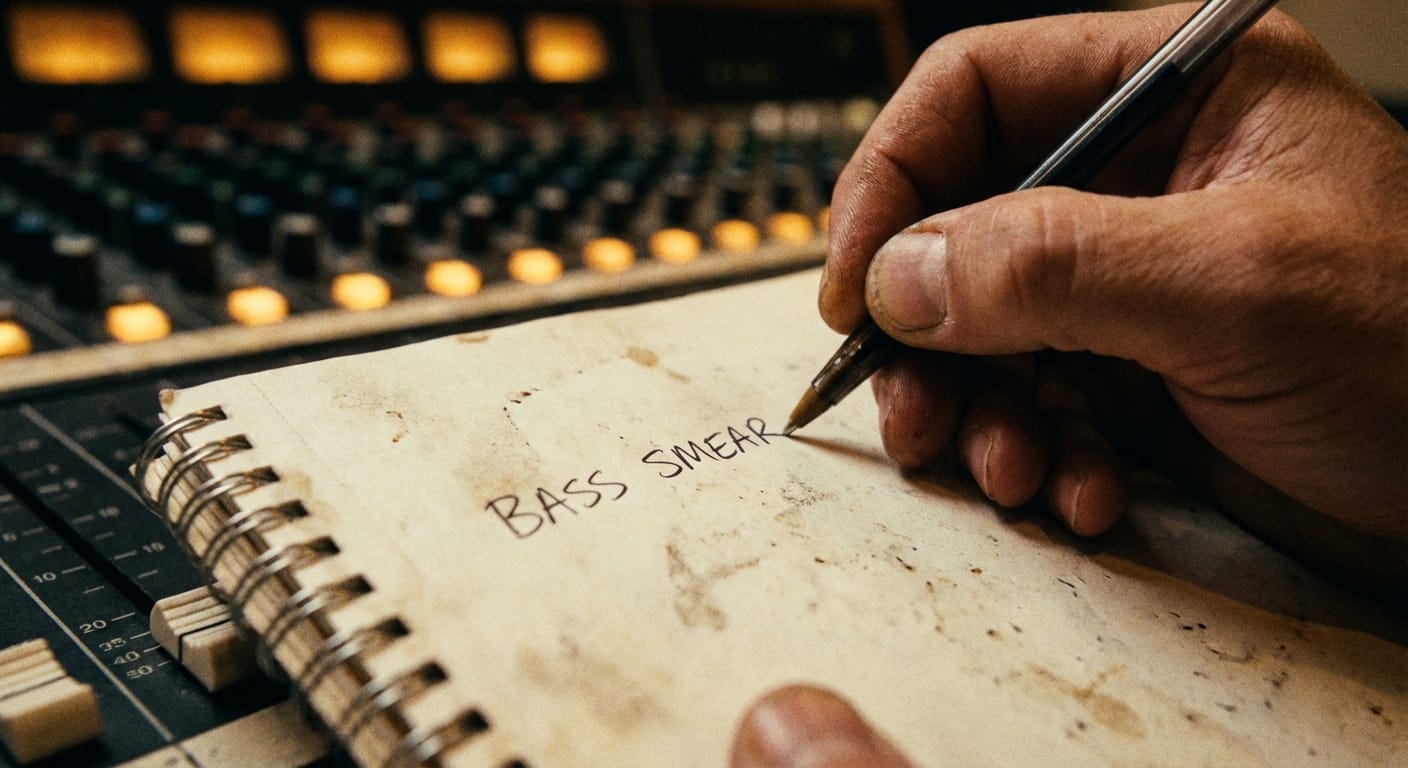
The session ends right. Balanced, clear, the automation moving where you told it to move. You export a 320k MP3, drop it in the car, press play.
The low end collapses into a hum. The lead you spent two hours on becomes something ordinary. The transient precision you tracked down to a millisecond, gone. The whole thing sounds like a proof of concept rather than a finished mix.
You drive home. You make adjustments. You export again. The car sounds better, but now your phone sounds different. You fix that. Something else surfaces. Two days later, you’re still in the same loop. It isn’t because the mix is failing. It’s because you have no fixed method for knowing when it’s done.
This isn’t an ear problem. It isn’t a gear problem. It’s a ritual problem.
Translation Is Not Luck
The assumption most producers carry is that translation is a skill you develop over time. Better ears. Better monitors. More sessions. Some mixes translate and some don’t, and the ones that do reflect experience accumulated over years.
That framing is wrong in a specific way: it makes translation feel like talent you either have or you’re building toward. It turns good translation into luck and bad translation into failure. And it means you confuse the mix that happened to work with a repeatable result.
Translation is not talent. Translation is ritual. A fixed sequence of checks you run in the same order, every time, before you call the mix done.
Rituals work because they are fixed, not because they are inspired.
The Recurring Note
Before the ritual: one concept.
When you check a mix on multiple platforms, certain problems keep appearing. The same note in your notebook after the car check and the phone check and the mono check. Not three different problems. One problem, reporting from three different rooms.
That is the recurring note: the observation that survives every platform change. Not noise from one check, but the signal that refuses to disappear. The recurring note is the only thing that matters. Everything else is environmental variance.
The ritual is designed to surface the recurring note quickly and give you a clean exit condition: you are done when the same note stops appearing.
The Sequence
Four checks. This order. Always.
1. The Car. Not because cars have good speakers. Because your car is a known quantity. You know how your reference mixes sit in it. You know which frequencies the system emphasizes. That familiarity is calibration that no other playback environment gives you.
Play one full section: a verse into a chorus, a breakdown into the drop. Listen for one thing: what is not present anymore. Not what sounds different from your monitors. What is missing. If an element disappears in the car, it was not in the mix. It was in the room.
Write one note. The most important thing that disappeared.
2. The Phone. The flat, slightly harsh speaker that compresses the low end and exposes every midrange collision. This is where the majority of first listens happen.
Play the same section. Listen for one thing: what collapsed. Two elements that sounded separate on your monitors but stack into the same frequency smear on a phone. A kick and a bass that lived in different spaces until the speaker removed the illusion of separation.
Write one note. What collapsed.
3. Mono. You already know what mono reveals. Not a compatibility check. A diagnostic. Phase issues, borrowed width, elements that were floating on stereo spread instead of sitting in frequency space. The micro-contrast automation that moved your attention in stereo and disappears in mono was never real movement. It was a stereo-only event.
Write one note. The most important thing mono showed you that stereo was concealing.
4. The Reference. One comparison at matched loudness. Not A/B for curve matching. Not trying to copy a master. You are resetting your ear’s calibration after working inside your own mix for hours. What does the reference feel like compared to yours? Not what is different: what does each one feel like?
Write one note. The single most important gap in weight or density.

The Logic of the Sequence
Four checks. Four notes. You address the notes. You run the sequence again.
Here is what changes when the sequence is fixed: you stop making isolated fixes. When the car note and the mono note point to the same frequency range, they are the same problem. You fix it once and verify on both platforms in the same pass, not in separate sessions two days apart.
The sequence reveals patterns. Saturation that was doing structural work survives all four checks: the presence holds in the car, the edges read on the phone, the harmonic content doesn’t cancel in mono, the weight sits close to the reference. Saturation that was decorating the surface fails at least one check. You know which is which because you ran the same ritual on both.
The recurring note surfaces fast. Two or three checks revealing the same issue is not bad luck. It is information: this is the real problem, not the noise.
The Exit Condition
The instinct is to keep fixing. Every check reveals something. You address it. Something else comes up. The session stretches.
The ritual ends this loop because it has a defined condition: you’re finished when you run the full sequence and the same note does not appear.
Not when the mix sounds perfect in your room. Not when the reference is matched. Not when you run out of things to notice. When the recurring note is gone.
Run the sequence. All four checks. All four notes. If you see a note you’ve already fixed, it isn’t fixed. If every note is new, the mix has new real problems, not recurring ones. Address those. Run again.
One pass where no previous note repeats. That is done.
Finish when the same note stops repeating.
What check do you always skip, and when was the last time skipping it came back on you?